Reducing Anxiety in Emergency Departments
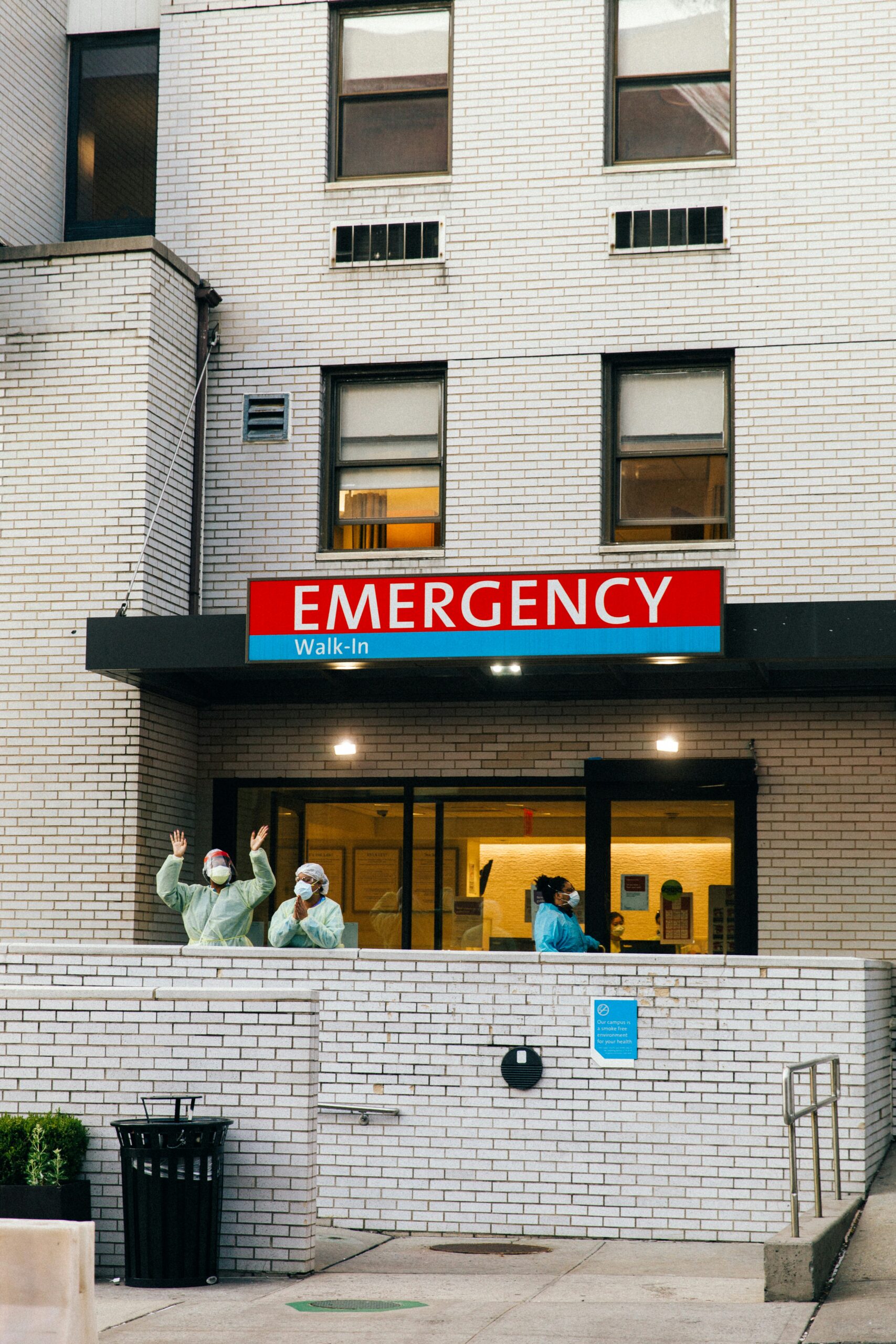
There are few environments where the gap between design intent and lived experience becomes apparent as quickly as in a hospital Emergency Department. Within moments of arrival, patients and their families are confronted with a fundamental question:
What happens next?
In most cases, the environment itself does not provide a clear answer. The result is not just inconvenience, it is anxiety. And that anxiety is not simply a byproduct of medical urgency. It is a direct consequence of how little the system communicates to the people moving through it.
The Emergency Department is, by design, a highly orchestrated system. Clinical workflows are structured, priorities are constantly evaluated, and decisions are made with precision and urgency. From the perspective of staff, the system is active and responsive.
From the perspective of the patient, however, it feels like nothing is happening.
A typical visit begins with arrival under stress, followed by check-in and an extended period in the waiting room. During that time, patients are left without meaningful insight into their status. They do not know how long the process will take, where they stand relative to others, or what factors are influencing the order in which patients are seen. As names are called, often out of sequence, the absence of visible logic introduces doubt. The system may be functioning exactly as intended, but without context, it feels unfair.
The need for clarity is not a matter of convenience, it is essential. Yet the experience remains largely the same: a sequence of events that is clinically sound but experientially opaque.
When Progress Doesn’t Feel Like Progress
The transition from waiting room to triage represents a step forward in the clinical process. Vitals are taken, symptoms are documented, and initial assessments are made. From an operational standpoint, this is meaningful progress.
Yet when patients are sent back to the waiting room afterward, the experience often feels like regression.
The issue is not the process; it is the absence of feedback. There is no signal within the environment to indicate that a milestone has been reached or that the next phase is underway. Without that reinforcement, the journey feels circular rather than sequential. Patients are left to infer meaning from incomplete information, which amplifies uncertainty rather than reducing it.
Even though the system is advancing through evaluation, prioritization, and coordination, those movements remain invisible to the people experiencing them.
A Different Kind of Waiting
Once inside a treatment room, there is an initial sense of relief. The transition suggests that care is imminent. However, a new phase of uncertainty quickly emerges.
Patients are often told that a clinician will arrive shortly, but “shortly” is undefined. Time becomes difficult to interpret. Brief visits from nurses provide fragments of activity, but not a cohesive understanding of what is happening overall. Patients are left questioning whether they are waiting for a physician, for test results, or for a decision that has yet to be made.
Again, the system is working behind the scenes. Diagnostics are being processed, clinicians are reviewing information, and care decisions are being formulated. But without visibility into that progression, the experience feels idle.
A Personal Lens
For families who interact with Emergency Departments frequently, these dynamics are not abstract.
My daughter has a severe respiratory condition that has required years of treatment, consultation, and ongoing management. We have sought care from institutions such as Children’s Hospital of Pittsburgh, Children’s Hospital of Philadelphia, and the National Institutes of Health. Despite the expertise involved, the condition remains unresolved, and Emergency Department visits are a recurring reality.
In these moments, the stakes are elevated. The need for clarity is not a matter of convenience, it is essential. Yet the experience remains largely the same: a sequence of events that is clinically sound but experientially opaque.
The Core Disconnect
Across each phase of the Emergency Department journey, a consistent pattern emerges. The primary source of anxiety is not simply the duration of the process. It is the lack of visibility into that process.
Patients are not asking for control over clinical decisions. They are asking for understanding.
This distinction is critical. It reframes the challenge from one of operational efficiency to one of communication design.
Emergency Departments have historically been designed to support the needs of providers: to enable rapid response, optimize workflows, and manage unpredictable demand. While these priorities are essential, they do not inherently address the informational needs of patients.
As a result, a gap is created between what is happening and what is perceived to be happening.
The Role of the Technology Layer
This is where the concept of a “technology layer” becomes essential.
The opportunity is to make the invisible aspects of care visible in a way that is intuitive, continuous, and unobtrusive.
In the waiting room, this could take the form of anonymized queue positioning, real-time status updates, and contextual explanations of triage prioritization. Such systems would not alter clinical decision-making, but they would provide transparency into how those decisions are made.
During transitions, subtle feedback mechanisms could reinforce progress by confirming that a step has been completed and indicating what comes next. These cues would transform the perception of movement through the system from ambiguous to structured.
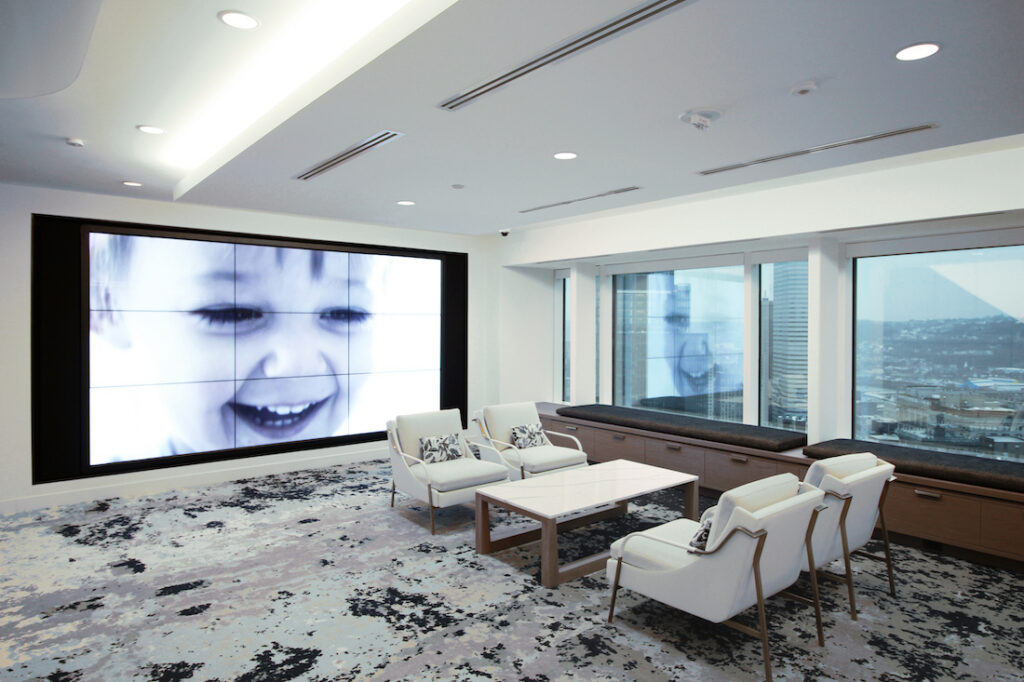
Within treatment rooms, contextual displays could provide insight into the current phase of care, anticipated next steps, and approximate timing. Even broad estimates would offer a framework for understanding, replacing uncertainty with informed expectation.
Importantly, none of these interventions change the underlying medical process. They change how that process is experienced.
The Impact of Clarity
When patients are given visibility into their journey, the effects extend beyond perception.
Anxiety is reduced, not because the situation is less serious, but because it is more understandable. The cognitive load associated with uncertainty diminishes. Patients and families ask fewer repetitive questions, allowing staff to focus more fully on care delivery. The environment begins to feel more controlled, even in inherently unpredictable circumstances.
In this sense, clarity functions as a form of operational support. It aligns patient perception with system reality, reducing friction on both sides.
A Design Principle for the Future
The implications are broader than the Emergency Department.
Anxiety in complex environments is often attributed to time. It is more closely tied to uncertainty. And uncertainty is, at its core, a failure of communication.
This reframes the role of design. It is no longer sufficient for spaces to facilitate function; they must also convey information. Increasingly, this responsibility falls at the intersection of architecture and technology.
The most effective environments will be those that can continuously and passively answer three fundamental questions:
- Where am I?
- What is happening now?
- What happens next?
When those questions are addressed, the experience of the space fundamentally changes.
Emergency Departments will always involve waiting. That is an inherent aspect of prioritizing care in dynamic, high-stakes situations.
But confusion during that wait is not inevitable.
By integrating communication into the fabric of the environment through thoughtful application of technology, healthcare facilities can transform uncertainty into clarity.
Performance in healthcare design is not defined solely by speed or efficiency, but by how well the environment aligns human understanding with clinical reality.
This article was written by Bill McIntosh, RCDD, PMP, CTS-D; BrightTree Studios Co-Owner & President
More Insights