One Space, Many Uses: Designing Flexible Technology for Higher Education
A classroom that hosts a lecture at 9 a.m. may need to support collaborative learning, a hybrid meeting, or an entirely different academic discipline by the afternoon. Today’s colleges and universities are asking more of their existing spaces, making flexibility an increasingly important part of campus planning. Rather than dedicating every room to a single purpose, institutions are looking for ways to create environments that can support multiple users, technologies, and teaching styles without continually adding square footage.
Multipurpose, dual-use spaces are a common solution to the question of growing facility needs—they create opportunities for flexibility and scalability without necessarily requiring more square footage. BrightTree Studios Senior Audiovisual Designer Bob Rotto, CTS-D, reinforces that understanding an existing building’s layout makes the difference in optimizing flexibility.
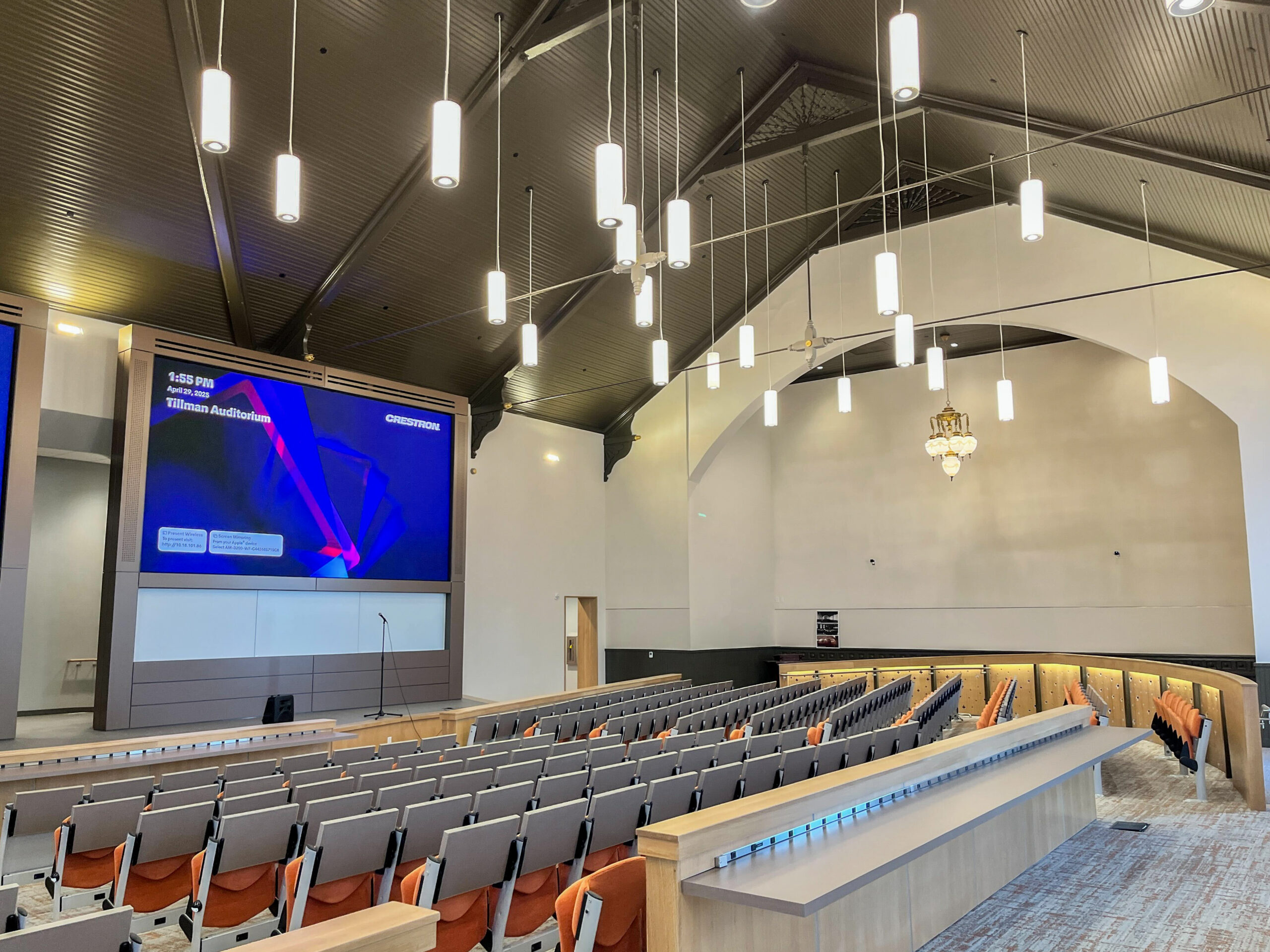
“The only thing that’s remaining is the shell of the building,” Rotto says. “It’s usually open, and we’re dealing with it as if it’s a new build, just fitting
within a shell.”
However, not every existing space is equally suited for multiple uses—in an adaptive-reuse project, designers must understand what the existing room will allow. Room geometry, sightlines, columns, ceiling heights, and available floor area can all influence what is possible. Even open space above the ceiling can become a major consideration, since HVAC, electrical, fire protection, lighting, telecommunications, and AV systems compete for limited room.
Room geometry is a particularly formidable challenge for AV systems in multipurpose projects. In large classrooms, lecture halls and auditoriums, limits on ceiling height can limit display sizes and ultimately impact visibility and readability for students further from the front. “Where your furthest viewer can be in any space is directly proportional to how big of a display we can get in that room,” says Rotto.
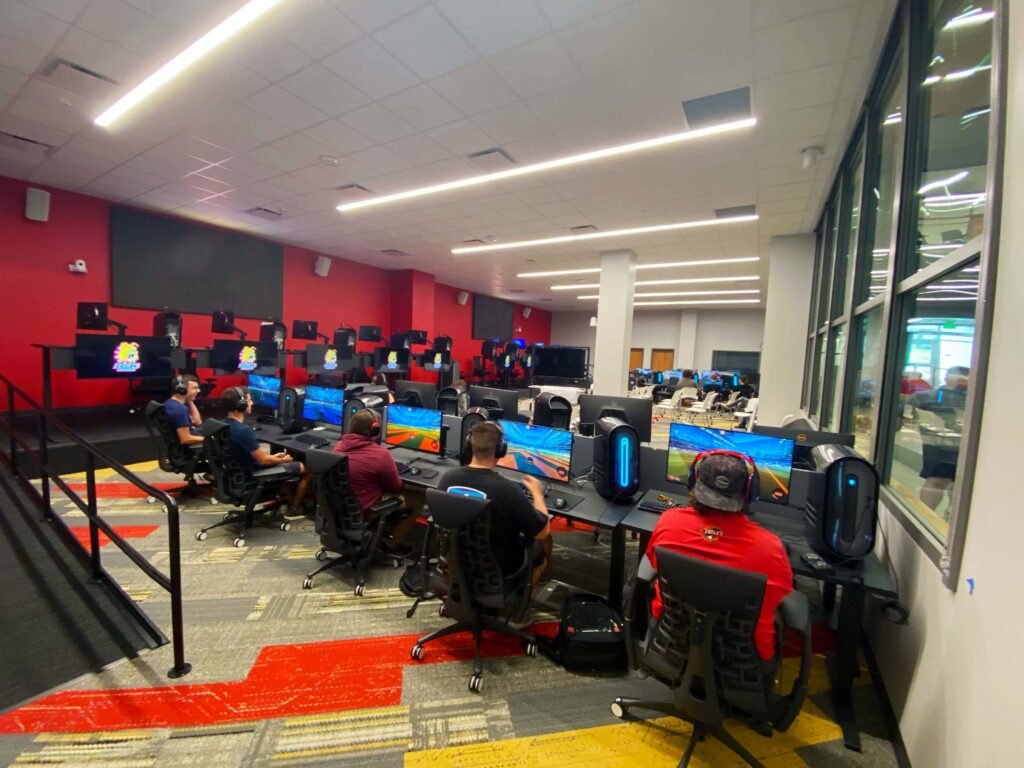
This kind of consideration can be easier to address when it is included early on in the design process. Once the architecture of a space is established, there are fewer options to adjust technology without significant cost or compromise. Flexible furniture can open up space in a room, but if power, data and AV systems are only configured in one location, scalability is limited. Architecture must allow space for additional evolving technology. “The infrastructure is cheap compared to the actual endpoint technologies that we use,” says Rotto. “You can’t install every possible technology today, but you can create infrastructure that allows the space to evolve without requiring major reconstruction every time the space needs to change.”
Technology has also changed what flexible spaces can look like. Network-based AV and AV-over-IP systems distribute audio and video signals through the network rather than relying entirely on traditional point-to-point connections. This kind of network-based connectivity creates opportunities for scalable classrooms, active-learning environments and multipurpose spaces where technology can support many configurations. Displays and content sources can be distributed throughout a space or, in some cases, centralized and shared among multiple rooms. The result is a setup that can grow and change with the institution.
While a classroom may start with a simple technology fit, it can later gain additional displays and sources without requiring a full system redesign. “What you design today can be much more malleable to what it needs to be doing in the future,” Rotto says.
Flexible, scalable spaces on college campuses aren’t a catch-all solution to growing and changing needs—a single space is not capable of doing everything. However, project teams can identify where unique flexibility provides true value and design infrastructure around those capabilities. For universities considering adaptive reuse, this can look like adding AV and other technical disciplines to the conversation early on to optimize technology layouts before they are compromised by infrastructure.
Rotto says that the goal isn’t to necessarily predict how a space may be used five or ten years down the road, but to avoid designing a space that can’t adapt when those uses inevitably change. In higher education, multipurpose dual-use spaces give an old space a new purpose and a chance to stay relevant and modern as new possibilities develop.
More Insights